


Tungsten Carbide Inserts
Zigong Lituo New Material Corp.,Ltd. is founded in 2006, located in China second largest cemented carbide distributing center -- Zigong, where is known as" age-old salt city, southern city of lights and dinosaur town”.
We are committed to:leading technology, promoting quality, improving equipment and innovating management. We gradually formed a standardized manufacturing advantages to ensure that the products have stable and high qualities.
Why Choose Us?
High quality
We gradually formed a standardized manufacturing advantages to ensure that the products have stable and high qualities.
Competitive Price
We offering a higher-quality product or service at an equivalent price. As a result we have a growing and loyal customer base.
Rich experience
Our company has many years of production work experience. The concept of customer-oriented and win-win cooperation makes the company more mature and stronger.
24 hours online response
We try and respond to all concerns within 24 hours and our teams are always at your disposal in case of any emergencies.


Product Categories


What is Tungsten Carbide Inserts?
It’s a material that combines tungsten and carbon to create an incredibly hard and durable substance. This unique composition is what gives tungsten carbide its outstanding properties that make it a popular choice for manufacturing inserts.
Tungsten carbide inserts are typically made through a process of mixing tungsten carbide powder with a binder material, such as cobalt, and then pressing and sintering the mixture to create a solid piece.
Benefits of Tungsten Carbide Inserts
High wear resistance
If you're looking for wear resistance, then carbide might be a good bet for your industrial cutting operation. Wear resistance is how hard it is to remove material by wear.
Fewer knife and blade changes
Because of carbide's tendency to wear well, there is often less need to change machine knives as often. The reduction of downtime for maintenance of blades contributes to higher volume and more profitability.
Efficiency via cutting edge retention
Carbide or carbide tipped cutting tools are more efficient compared to high speed because they retain their cutting edge hardness at high machining temperatures.
Versatility
Tungsten carbide inserts can be used in a wide range of applications, from metalworking to woodworking.
Application of Tungsten Carbide Inserts
In the metalworking industry, tungsten carbide inserts are commonly used for cutting and shaping various metals with precision and speed. Their durability and wear resistance make them a valuable asset for fabricators and manufacturers looking to streamline their production processes.
Woodworkers also rely on tungsten carbide inserts for creating intricate designs and smooth finishes on wooden surfaces. Whether you’re shaping furniture or crafting custom cabinetry, these inserts can help you achieve professional results with ease.
When it comes to the mining and construction industry, tungsten carbide inserts are essential for drilling through tough materials like rock and concrete. Their resilience and longevity make them an ideal choice for heavy-duty applications that demand reliability and performance.
let’s not forget about the automotive industry, where tungsten carbide inserts are used for machining engine components, cutting brake pads, and shaping intricate parts. Their precision and durability make them a must-have tool for maintaining and manufacturing vehicles.
Tungsten carbide products are all made of tungsten carbide powder. In manufacturing, some other powders will be added to the tungsten carbide powder as a binder to combine tungsten carbide particles very tightly. In the ideal condition, the higher proportion of tungsten carbide powder, the better the performance of tungsten carbide products will be. But in fact, pure tungsten carbide is fragile. This is why binder exists. The name of the grade always can show you the number of binders. Like YG8, which is the common grade used to produce tungsten carbide products, has 8% of cobalt powder. A certain amount of titanium, cobalt, or nickel can change the performance of tungsten carbide. Take cobalt as an example, the best and most common proportion of cobalt is 3%-25%. If the cobalt is more than 25%, the tungsten carbide will be soft because of too many binders. This tungsten carbide can’t be used to manufacture other tools. If less than 3%, the tungsten carbide particles are difficult to bind and the tungsten carbide products after sintering will be very brittle.
Process of Tungsten Carbide Inserts
1. Inserts, mainly tungsten carbide and cobalt in various combinations, start out as a powder. Here a container is filled with the right mixture of ingredients for the specific powder ordered.
2. In the mill, the dry raw material is mixed with a solution of ethanol and water. The result is a gray slurry that is about the consistency of a yogurt drink.
3. After the slurry has been dried, samples are sent to the laboratory for a quality check. The powder consists of agglomerates, small balls of 20 to 200 microns in diameter. That’s tiny – a strand of hair is 50 to 60 microns thick.
4. The powder is transported in 100-kg barrels to the pressing machines where the inserts are made. The operator places the pressing tool, a mold for the specific insert about to be pressed, in the machine and enters the order number into the computer. The cavity of the press tool is filled with powder. Each insert is pressed with 12 tons of pressure, and it’s weighted by the machine and controlled visually by the operator. At this stage the insert is extremely fragile, breaking easily.
5. The pressed inserts need to be heated in order to harden. For this, a sintering oven is used. The oven can take several thousand inserts at a time. The inserts are heated to approximately 1,500 degrees Celsius in a process that takes some 13 hours and fuses the pressed powder into cemented carbide, an extremely hard material. Shrinkage in the sintering process is about 50 percent, so sintered insert is only about half the size of the pressed piece.
6. After another visit to the laboratory for a quality check, the top and bottom of the insert are ground to the correct thickness. Because the cemented carbide is so hard, industrial diamond – the world’s hardest material – is used to grind it.
7. When the insert is the right thickness, it’s sent for more grinding to get its geometry and size exactly right. This is the most advanced grinding done in Gimo, using 6-axis grinding plates to achieve very tight tolerances.
8. Once ground, the inserts are cleaned and sent for coating. At this stage, to avoid any grease or dust, the inserts must be handled with gloves. They are placed in fixtures on a carousel and entered into an oven with a low pressure where they are coated. This is where the insert gets its specific color.
9. The insert is now finished. Samples from each batch are inspected with a microscope to ensure that the quality is right.
10. Before being packaged, each insert is inspected again and compared with the blueprints and batch order. A laser marks the insert with the correct grade, and it’s placed in a grey box with a printed label. It’s now ready to be distributed to customers.
How to Maintain Tungsten Carbide Inserts
Regular inspection
Regular inspections play a pivotal role in detecting any signs of damage or wear on the Tungsten Carbide inserts. Inspect the inserts for any chipping, cracks, or uneven wear patterns. If any defects are found, it is important to replace the worn-out inserts immediately to prevent further damage.
Cleaning and lubrication
After each operation, thoroughly clean the Tungsten Carbide inserts to remove any dirt, grit, or drilling residues. Use a brush and a mild detergent solution to clean all the surfaces of the inserts. However, exercise caution while cleaning to avoid any damage to the inserts. Once cleaned, dry the inserts properly before storage.
Applying a thin layer of lubricant, such as a rust inhibitor or specialized inserts lubricant, can significantly extend the life of the inserts. The lubricant helps prevent rust formation and reduces friction, leading to less wear and tear during the operation process.
Correct storage
Proper storage is crucial to prevent unnecessary damage or deterioration of the Tungsten Carbide Button Bits. Avoid keeping the inserts exposed to moisture or excessive heat, as both can lead to corrosion and reduction in their performance. It is advisable to store the inserts in a dry and cool environment, away from direct sunlight. Additionally, make sure to store the bits individually or in specialized storage boxes to prevent any contact or collision that can cause damage.
To prolong tool life under challenging cutting conditions, many types and combinations of coatings have been developed. They can be applied in two ways: by chemical vapor deposition (CVD) or physical vapor deposition (PVD). Both types are applied in furnaces.
Chemical vapor deposition
For CVD, the coating is usually 5- 20 microns thick. Milling and drilling inserts usually receive 5–8 icrons, as these operations require better surface finish, and they encounter more impact, so they require greater edge toughness. For turning applications, the coatings tend to be in the range of 8–20 microns. In turning, heat and abrasion tend to be more of a concern.
Most, but not all, CVD coatings are made up of multiple layers, usually three distinct layers.
Each company has its own “recipe” for coatings. Here is a typical scheme, building up three layers.
Here is a typical scheme, building up three layers.
● One layer of titanium carbo-nitride for hardness and abrasion resistance
● One layer of aluminum oxide, which retains hardness at higher temperatures and is chemically very stable
● One layer of titanium nitride, which prevents metal buildup from fragments of the workpiece welding to the tool. This coating is gold-colored and makes it easy to observe wear of the edge. To apply a CVD coating, the parts are placed on trays and sealed in a furnace. The furnace is drawn down to a vacuum.
For each layer, the appropriate gases are introduced into the furnace, such as hydrogen, titanium tetrachloride, methane, nitrogen, aluminum chloride. A chemical reaction occurs, depositing the layer of coating on the inserts.
The aluminum oxide provides thermal protection, keeping heat out of the body of the insert, important for high speed applications. For low speed applications, an insert may not need an aluminum oxide layer.
Physical vapor deposition
PVD coatings are typically about 2-4 microns thick. Different manufacturers use different numbers of layers. These PVD coatings are well-suited to applications cutting high temperature, nickel-based, cobalt-based or titanium-based materials, and sometimes steel and stainless steel.
Titanium carbo-nitride, titanium nitride and titanium aluminum nitride are widely used as PVD coatings. The latter is the hardest and most chemically stable PVD coating.
The inserts are mounted on racks so they are separated from each other. Each rack rotates and the whole assembly of racks revolves within the furnace, so every surface of the inserts is exposed to the deposition process. The furnace is evacuated.
Strong negative charge is applied to the inserts. A piece of titanium, or titanium and aluminum is installed on the wall or floor of the furnace. The metal is vaporized by either an electric arc or an electron beam, liberating the positively charged metal ions. These ions are attracted to the negatively charged inserts. Nitrogen and methane are added as appropriate, to achieve the different types of coatings.
When the inserts are removed from the furnace they may be ground again, or directly packaged and shipped.

Tungsten carbide is prepared by reaction of tungsten metal and carbon at 1,400–2,000 °C. Other methods include a lower temperature fluid bed process that reacts either tungsten metal or blue WO3 with CO/CO2 mixture and H2 between 900 and 1,200 °C.
WC can also be produced by heating WO3 with graphite: directly at 900 °C or in hydrogen at 670 °C following by carburization in argon at 1,000 °C. Chemical vapor deposition methods that have been investigated include:[10]
reacting tungsten hexachloride with hydrogen (as a reducing agent) and methane (as the source of carbon) at 670 °C (943 K)
WCl6 + H2 + CH4 → WC + 6 HCl
reacting tungsten hexafluoride with hydrogen (as reducing agent) and methanol (as source of carbon) at 350 °C (623 K)
WF6 + 2 H2 + CH3OH → WC + 6 HF + H2O
Our Factory
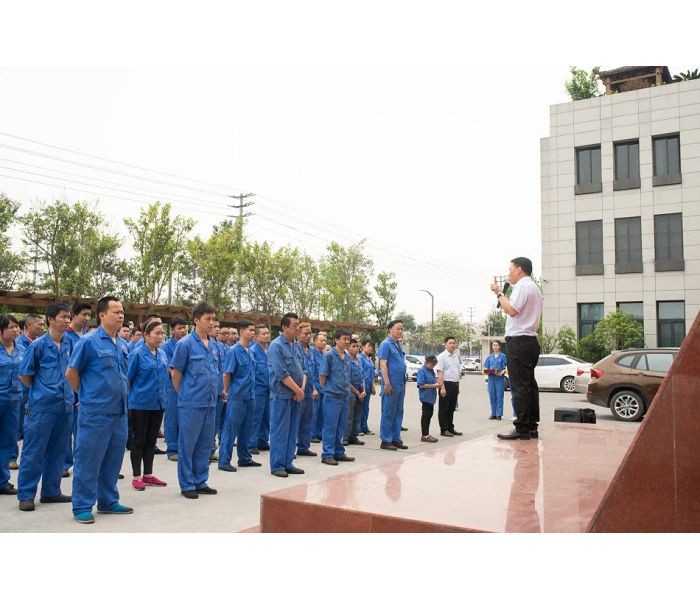
Founded in 2006, Zigong Lituo New Material Corp.,Ltd is located in the Chinese famous tungsten carbide products base city-Zigong. We are one of the biggest manufacturers of tungsten carbide sleeve and carbide insert snow plow blade in China.


FAQ
We're well-known as one of the leading tungsten carbide inserts manufacturers and suppliers in China. Please feel free to buy high quality tungsten carbide inserts at competitive price from our factory. Contact us for more hot sale products.
Tungsten Carbide Milling Inserts, Tungsten Carbide Nozzles, Tungsten Carbide Insert