


Tungsten Carbide Nozzles
Zigong Lituo New Material Corp.,Ltd. is founded in 2006, located in China second largest cemented carbide distributing center -- Zigong, where is known as" age-old salt city, southern city of lights and dinosaur town”.
We are committed to:leading technology, promoting quality, improving equipment and innovating management. We gradually formed a standardized manufacturing advantages to ensure that the products have stable and high qualities.
Why Choose Us?
High quality
We gradually formed a standardized manufacturing advantages to ensure that the products have stable and high qualities.
Competitive Price
We offering a higher-quality product or service at an equivalent price. As a result we have a growing and loyal customer base.
Rich experience
Our company has many years of production work experience. The concept of customer-oriented and win-win cooperation makes the company more mature and stronger.
24 hours online response
We try and respond to all concerns within 24 hours and our teams are always at your disposal in case of any emergencies.


Product Categories


What is Tungsten Carbide Nozzles?
Tungsten carbide nozzles are a type of nozzle made from tungsten carbide, a very hard and durable material. Tungsten carbide is a composite material composed of tungsten (W) and carbon (C) atoms, resulting in a high-strength material that is well-suited for a variety of industrial applications, particularly those involving abrasive and high-temperature environments.
Ultra wear resistant
The high hardness of tungsten carbide will provide a carefree extrusion experience. Its unparalleled wear resistance will ensure that both the nozzle diameter and flat will keep the same dimension, and so will your printed parts.
Low pushing force
The high thermal conductivity of both the nozzle tip and body will pump all the required heat to maintain an even temperature while extruding. Viscosity highly depends on the plastic temperature for a constant shear rate. The flow pressure will be constant resulting in excellent results and stability. The ease of pushing the filament will give an extra margin for your extruder safety.
Faster speed
Due to the high thermal performance of the nozzle in general, the printing speed can be pushed even further without sacrificing the quality. The special shape inside the nozzle allowed by the manufacturing technique improves the flow where the diameter gets reduced, thus allowing a faster flow rate.
Low friction
The whole nozzle is electroless nickel plated for enhanced slippery properties. Plastic will slide on the nozzle instead of sticking to it. This result is cleaner parts and less dragging problems.
Any material
From printing PLA to carbon fiber reinforced plastics, this nozzle can handle anything. The low friction coating greatly helps with flexible filaments allowing, them to slide through the nozzle. A single nozzle will offer quality prints, wear resistance, and high flow, so there is no need to get a ton of different nozzles when a single one can offer the best of all worlds.
Unbeatable price / performance
Tungsten carbide is easier to produce than corundum (Sapphire, Ruby, etc) and the performance is very similar for abrasion and much more performant for thermal conductivity. The use of steel makes it very easy to manufacture and offers amazing thermal performance. The whole package is a win-win situation in terms of performance and price.
Types of Tungsten Carbide Nozzles
Straight bore (tungsten carbide nozzle 1)
Straight Bore nozzles create a tight blast pattern for spot blasting or blast cabinet work. These are best for smaller jobs such as parts cleaning, weld seam shaping, cleaning handrails, steps, grillwork, or carving stone and other materials.
Laminar flow design long venturi (tungsten carbide nozzle 2)
Venturi bore nozzles create a wide blast pattern and increase abrasive velocity as much as 100% for a given pressure. Venturi nozzles are the best choice for greater productivity when blasting larger surfaces. Long venturi style nozzles yield about a 40% increase in productivity compared to straight bore nozzles, while abrasive consumption can be cut approximately 40%.
Double venturi (tungsten carbide nozzle 3)
Double venturi and wide throat nozzles are enhanced versions of the long venturi style nozzle.
The double venturi style can be thought of as two nozzles in series with a gap and holes in between to allow the insertion of atmospheric air into the downstream segment of the nozzle. The exit end is also wider than a conventional nozzle. Both modifications are made to increase the size of the blast pattern and minimize the loss of abrasive velocity.
Wide throat nozzles (tungsten carbide nozzle 4)
Wide throat nozzles feature a large entry throat and a large, diverging exit bore. When matched with the same sized hose they can provide a 15% increase in productivity over nozzles with a smaller throat. When wide throat nozzles also feature a larger diverging exit bore, they can be used at higher pressures to yield up to a 60% larger pattern with lower abrasive use.
Application of Tungsten Carbide Nozzles
Metalworking
Tungsten carbide nozzles are used in metal cutting, welding, and metal forming processes. They can withstand high temperatures and resist wear and erosion caused by metal particles and sparks.
Spray coating
Tungsten carbide nozzles are utilized in spray coating applications, where they deliver precise and controlled coatings on surfaces. Their hardness and resistance to abrasion help ensure consistent performance over time.
Abrasive blasting
Tungsten carbide nozzles are often employed in abrasive blasting equipment, where they can withstand the impact of abrasive materials like sand, grit, or shot. This ensures longevity and consistent blasting performance.
Oil and gas industry
Tungsten carbide nozzles find application in oil and gas drilling and exploration processes. They are used in downhole drilling tools to withstand the harsh conditions encountered during drilling operations.
Process of Tungsten Carbide Nozzles
The first step in manufacturing tungsten steel nozzles is selecting the appropriate material. Typically, tungsten is the primary component of these nozzles, with an alloying element such as cobalt or nickel comprising 6% to 30% of the composition. These alloying elements enhance the hardness, strength, corrosion resistance, and wear resistance of tungsten steel.
Cutting is a critical stage in the production of tungsten steel nozzles. High-precision mechanical equipment and tools are used during the cutting carbide nozzle process to ensure precise dimensions and surface quality. Turning, milling, drilling, and grinding methods are employed to shape and size the nozzle according to the design requirements.
Heat treatment is another crucial step in manufacturing tungsten steel nozzles. This carbide nozzle process enhances the internal structure and physical properties of the material, resulting in increased hardness, strength, and wear resistance. Heat treatment typically involves heating, holding, and cooling, which allows for control over the crystal and metallographic structure of the material.
Surface treatment is the final stage in the manufacturing process of tungsten steel nozzles. Its purpose is to improve the surface quality and performance of the nozzles, particularly enhancing their corrosion and wear resistance. Surface preparation encompasses procedures such as polishing, painting, plating, and chemical treatments that enhance the appearance and functionality of the nozzle.
How to Maintain Tungsten Carbide Nozzles
Cleanliness: Before installation, it is important to ensure that the inside of the nozzle channel and the connecting pipeline are clean and free of debris to avoid impurities affecting the spraying effect.
Hardness matching: Tungsten carbide nozzles are usually matched with carbide or stainless steel pipes to ensure that the hardness of the material is matched and prevent excessive wear.
Alignment and tightening: When installing, it is necessary to align the nozzle and the pipe interface, and use a special tool to gently screw it in to avoid deformation or fracture caused by over-tightening. It is recommended to use a torque wrench to control the tightening force.
Nozzle angle: Adjust the angle and direction of the nozzle according to the specific work requirements to ensure the accuracy of cutting or spraying.
Avoid overheating: Tungsten carbide nozzles are sensitive to high temperatures, and long-term high temperature environments should be avoided after installation to prevent annealing of the material.
Regular inspection: Regularly check the wear and tear of the nozzle, if there is serious wear or deformation, it should be replaced in time to ensure the normal operation of the equipment.
How the Nozzle Spray Is Created
The spray is created in a process that involves liquid passing through the nozzle and in that process the liquid is transformed into small droplets exiting the nozzle as a spray in a controlled manner. Flow and pressure are two important parameters in this process. Here is a simplified explanation of how a spray is created in a spray nozzle:
Inlet: Pressurised liquid (water, chemicals, or other fluids) enters the spray nozzle through an inlet opening.
Passage: Inside the nozzle, there is often a narrow passage or constriction. The narrow passage accelerates the flow of the liquid and increases its velocity.
Pressure drop: As the liquid flows through the narrow passage, there is a drop in pressure. This drop in pressure is a critical factor in creating a spray.
Droplet creation: The pressure drop, together with the high-velocity liquid being forced through a small orifice or opening, causes the liquid to break up into small droplets. Different types of nozzles create droplets in various size ranges. Droplet size can be crucial for certain processes to work efficiently and effectively.
Exit: The spray exits the nozzle orifice and is directed toward the intended target. The design of the exit opening also determines the direction of the spray and how wide the spray angle will be for a specific nozzle model.
Spray pattern The design of the nozzle and its components, such as shape, size and insert, determines the spray pattern. The spray pattern can for example be a fine mist, a solid stream, a fan-shaped spray, or a cone-shaped spray.
Install Your Tungsten Carbide Nozzle
It should be at the previous printing temperature or higher, depending on what you will print.
It is suggested to use a socket to avoid any burning risks.
Once you are unable to tighten it by hand, check if the threads are still visible. If the hex’s flat section is touching the heat block, you’ll need to tighten the heat break deeper inside the heat block. Loosen the nozzle, tighten the heat break and check again.
A good start is around 0.5Nm. Always use a tool with 6 faces when tightening. An open wrench shouldn’t be used and can permanently damage the flat faces.
Do not home your printer. Slowly move the Z axis down and check with a thickness gauge. Adjust your printer to the new Z height.
The tungsten carbide nozzle will print at a much lower temperature than other nozzles due to its high thermal conductivity and optimized flow geometry. If you keep the same settings as before, make sure to run a single wall test and adjust the flow.
● Slice a square part with a single wall, without any infill, top layers, and bottom layers.
Note down the line width specified by the slicer. Make sure the part is big enough to let the material cool down before another layer is laid down. A 40mm square by 10mm height should be a minimum.
● Measure the line width. Adjust the flow for your next prints.
Note that speed and temperature will change the flow behavior, run this test at a similar setting you will later be printing.
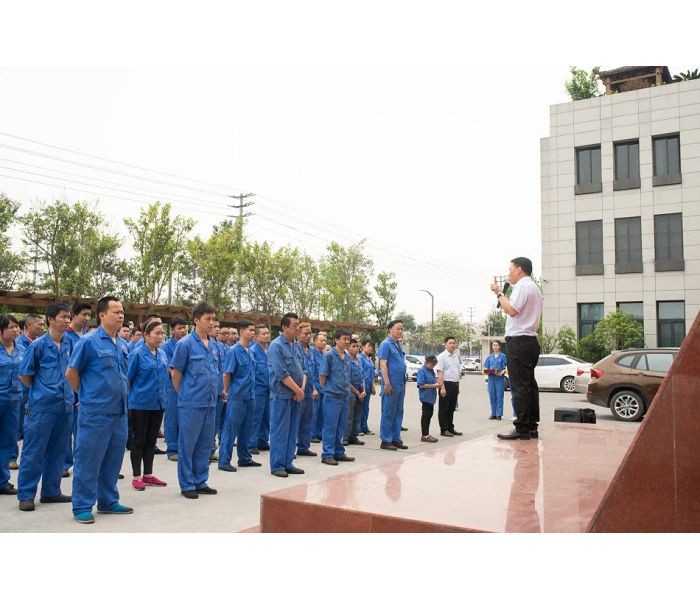
Our Factory
Founded in 2006, Zigong Lituo New Material Corp.,Ltd is located in the Chinese famous tungsten carbide products base city-Zigong. We are one of the biggest manufacturers of tungsten carbide sleeve and carbide insert snow plow blade in China.


FAQ
We're well-known as one of the leading tungsten carbide nozzles manufacturers and suppliers in China. Please feel free to buy high quality tungsten carbide nozzles at competitive price from our factory. Contact us for more hot sale products.
tungsten carbide thread nozzle of PDC drilling bit, Tungsten Carbide Interal Hexagonal Nozzle, Tumngsten Carbide Thread And Cross Groove Nozzle