


The common machining methods in the process of precision parts processing are turning and milling parts. That is, some of the precision parts we commonly use are milling parts or turning parts. They can be referred to as cutting parts. And cutting can be divided into "rough cutting" and "fine cutting". What are the differences between rough cutting and fine cutting?
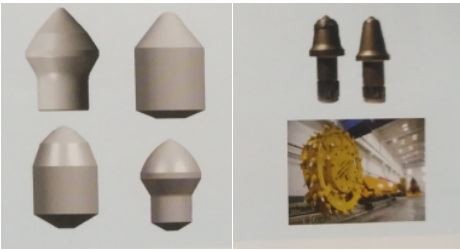
After rough cutting, the whole workpiece is very close to the appearance and size required by the workpiece itself. However, there is still a small margin on the surface of the workpiece to perform fine cutting. The surface of the workpiece after finishing cutting is more smooth and the dimension will be more accurate.
Generally, the workpiece can meet the required appearance and size after a rough cutting and a fine cutting. But not all the workpieces are cut once, some parts of some parts may need to be rough cut many times. At the same time, there are also some workpiece precision requirements not too high or the cutting quantity is very small, but also may only need to pass a fine cutting can meet the requirements of the workpiece.
Rough cutting because the workpiece needs to cut a large margin, it needs to have more cutting force than the fine cutting. This requires that the machine, tool and workpiece can meet the requirements. Moreover, rough cutting can quickly remove the allowance, and the surface performance after the effect can not be too rough.
Precision cutting is to the surface performance of the workpiece, and the dimension accuracy to meet the requirements of the workpiece, so the tool used for fine cutting also needs to be very sharp, because the cutting quantity is small, so the measurement precision is very high.


